It's a Random World
A new game begins. The rule is uncertainty.
The irruption of radical uncertainty in all fields and the end of the comforting universe of determinacy is not at all a negative fate, so long as uncertainty itself becomes the new rule of the game.
—— Jean Baudrillard
To be uncertain is for nothing yet to be decided. And for nothing yet to be decided is for every possibility to remain open — the world is not closed. It is open-ended.
Randomness is not an absence. It is possibility that has not yet taken form. And everything we call creation, everything we call innovation, is born from nowhere else.
The political scientist Brian Klaas puts it plainly: we control nothing, but influence everything. The world is built from countless chains of coincidence, and the smallest perturbation can rewrite history. What Frans Johansson named the click moment works the same way: success comes not from planning but from an unforeseeable intersection. What we can do is open ourselves to chance, place many small bets, and seize the moment when it arrives.
Randomness is not mere chaos. It is the inexhaustible source from which all things arise.

Begin with what is at hand
The management scholar Saras Sarasvathy studied serial, expert entrepreneurs and found a shared logic. They do not predict the future. They do not reason backward from a goal. They begin with the means already in hand, wager only what they can afford to lose, turn the contingencies they meet along the way into resources, and revise the destination itself as they go. She named this way of thinking effectuation.
And so, immerse in the now
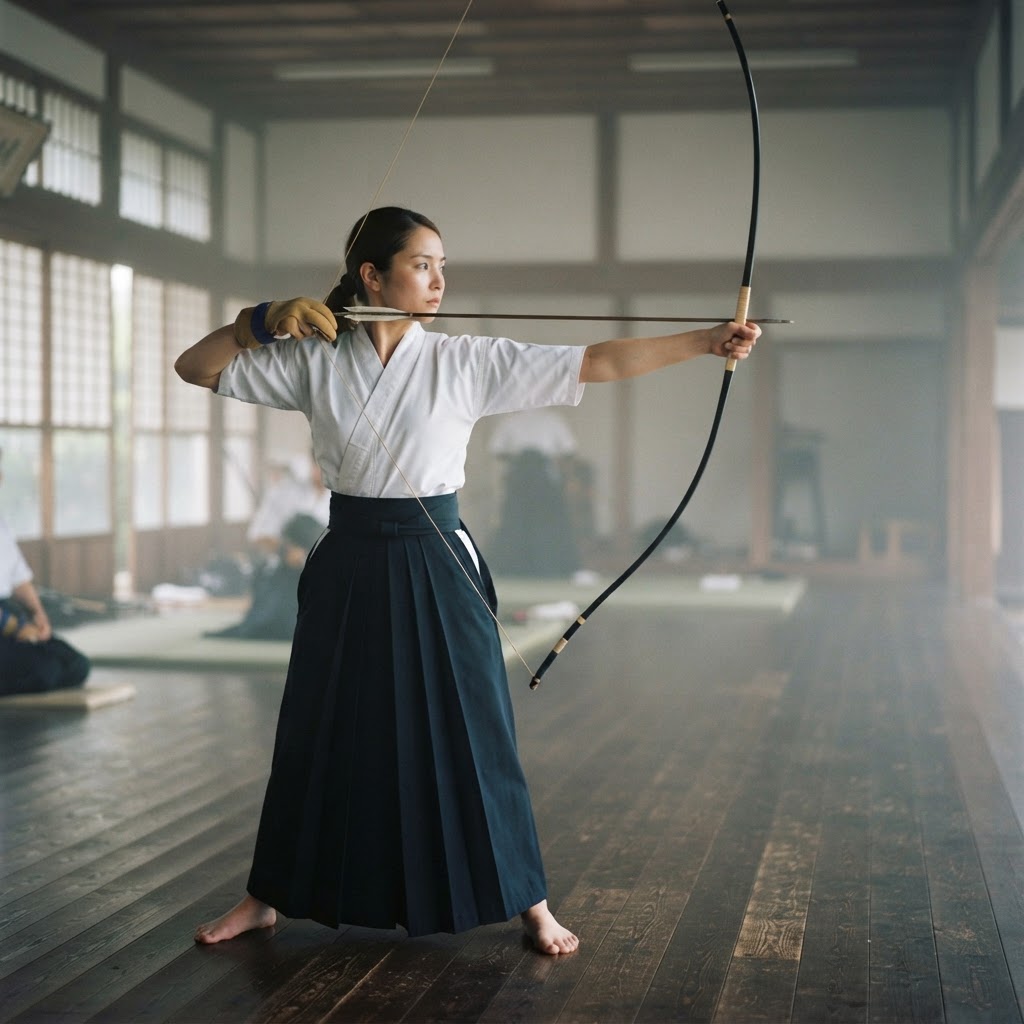
If the future is uncertain, sharpening our predictions is beside the point. What is worth wagering on is full presence in the now. In kyūdō, Japanese archery, there is kai (会) — the moment of full draw, the taut and complete instant before release. The archer does not aim at a future target; they fill this present moment entirely. When kai is full, the release comes of its own accord.
Goodhart's Law warns us: when a measure becomes a target, it ceases to be a good measure. The AI researchers Kenneth Stanley and Joel Lehman go further — greatness cannot be planned. To fix a clear objective is often the very thing that blocks the way to it: the myth of the objective. The harder we chase a projected number, the more the reality before us distorts. So we do not reason backward from a goal to force a market open. We stay open-ended, following the feel of the present. Product-market fit, as Marc Andreessen framed it, is not something you contrive to scale; it is something you catch in the live contact with a market.

Flow gives rise to form
Adrian Bejan's Constructal Law reveals that flow systems — river tributaries, the branches of a tree, city traffic, markets — evolve naturally toward configurations that grant greater access to flow. They branch, they change shape, they find ever more flowing forms. There is no contrivance. And still, out of apparent chaos, structure emerges. Not in spite of randomness, but through it.
Reality is made of relations, not objects
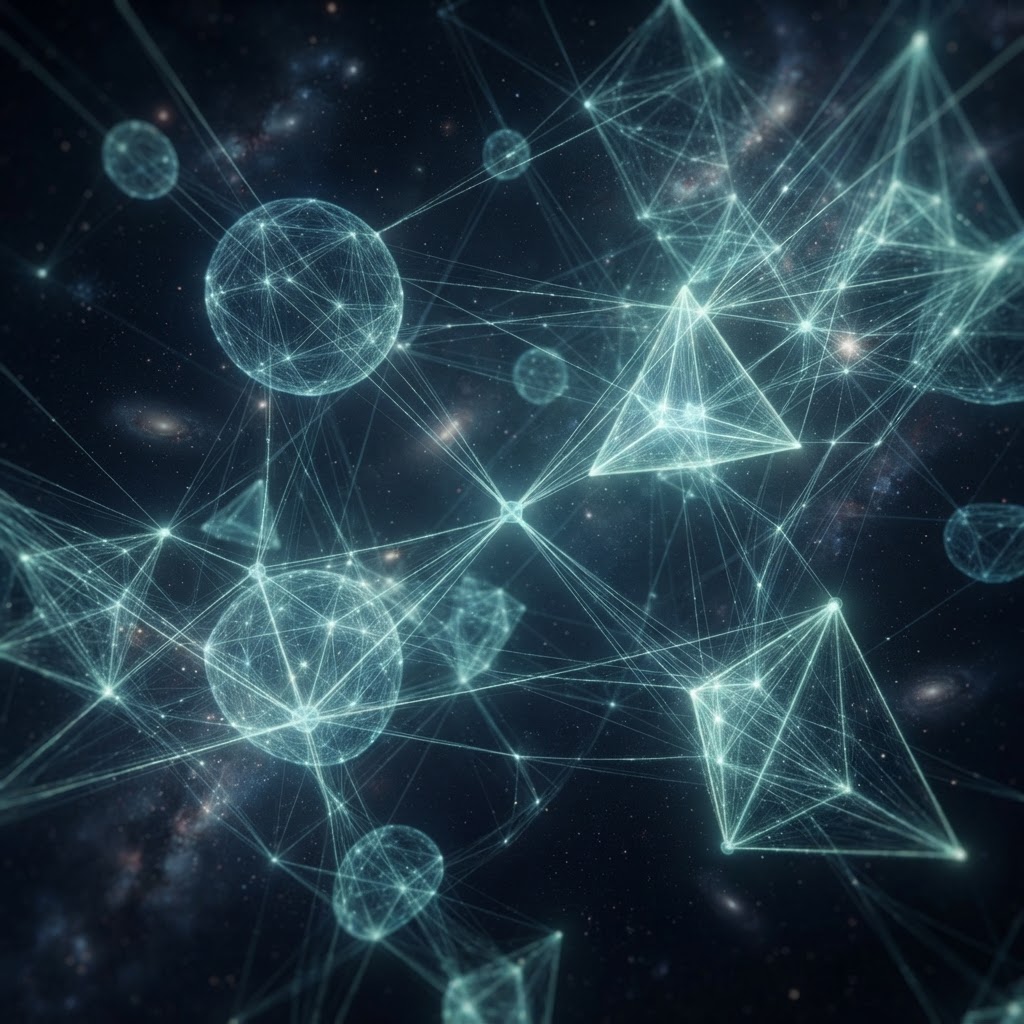
The theoretical physicist Carlo Rovelli arrived at a relational interpretation of quantum mechanics. The world is not a collection of independent objects existing in themselves. Nothing holds any property at all until it interacts with something else. Reality is relation. Rovelli sets this beside the words of Nāgārjuna, the second-century Buddhist philosopher: nothing arises in isolation; everything co-arises in mutual dependence — dependent origination. It is where the hardest edge of physics intersects with an ancient Eastern insight.
Change was code long ago
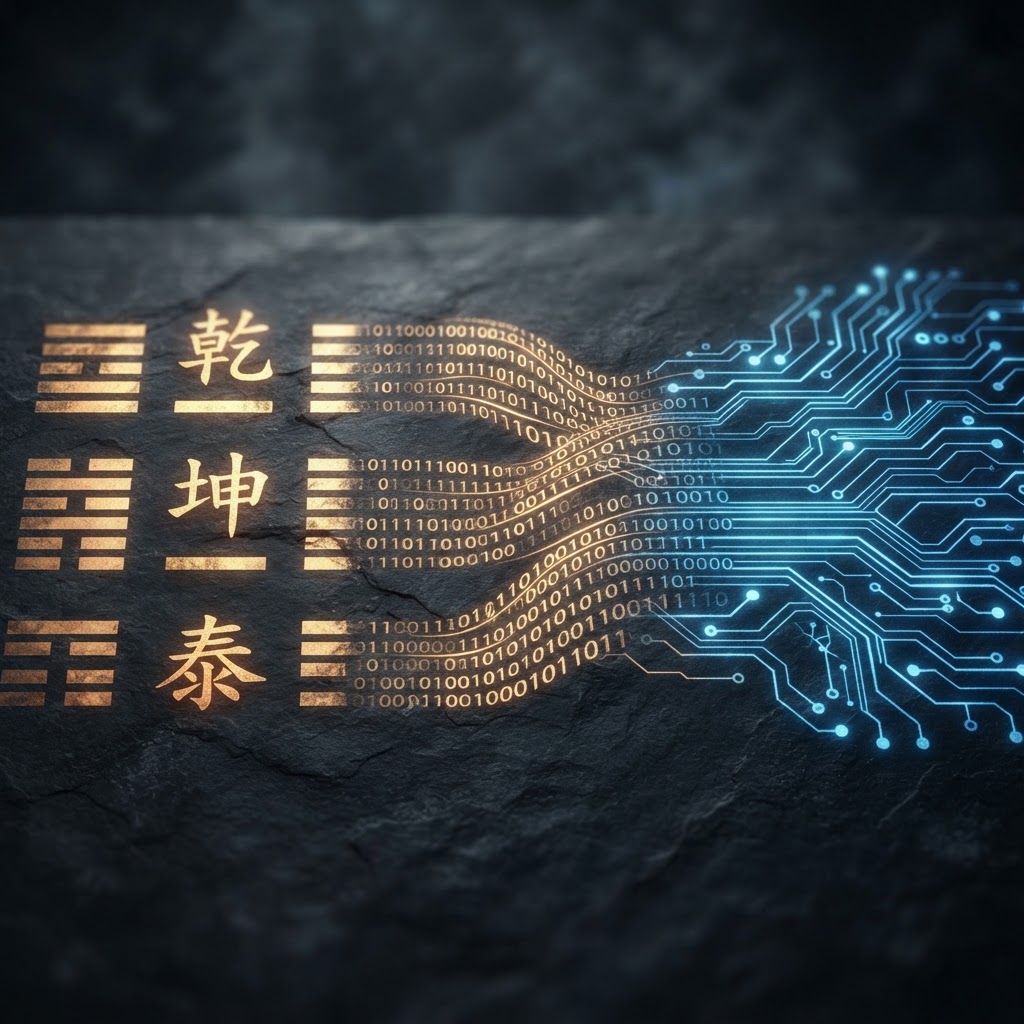
Three thousand years ago, the Chinese I Ching set out to read change itself. Its sixty-four hexagrams — woven from broken and unbroken lines, yin and yang — are an ancient technology for describing a world in ceaseless flux. Much later, Leibniz invented binary arithmetic: 0 and 1, creation out of nothing. Through the Jesuit Bouvet he encountered the hexagrams, and saw in them the very structure of his own binary. The lines became 0 and 1. That binary became the substrate of every computer — and now the foundation of the AI we speak with. An ancient art for meeting uncertainty became, by a long detour, the very language of the age of AI.
And so, the liberal arts
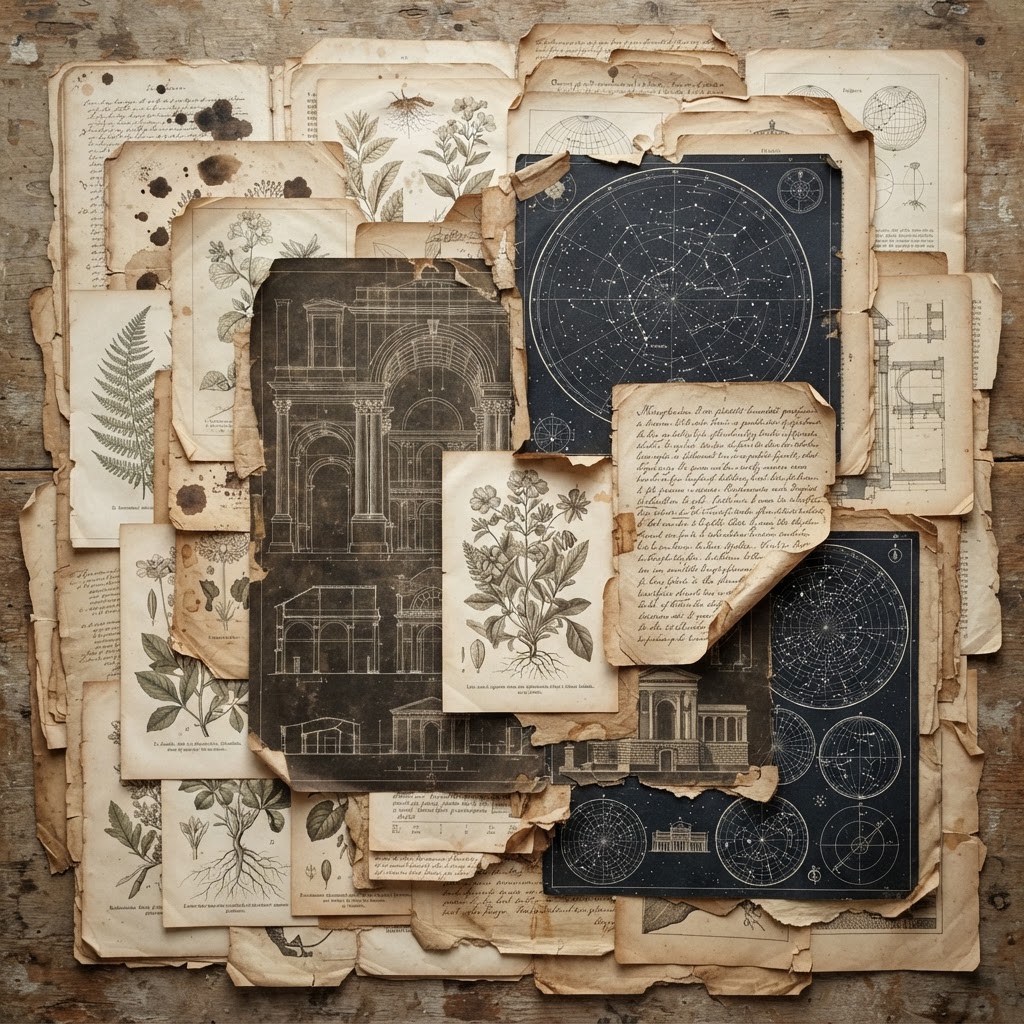
An entrepreneur's method. An archer's attention. A physics of flow. Reality as relation. A three-thousand-year lineage from divination to computation. Only when these seemingly scattered things are drawn along a single line does an image of the world come into focus. It is at the intersections of different knowledge that the unpredictable click moment is born. This work of reconnecting across the walls between domains is what we call the liberal arts.
Why the liberal arts — and why now, in the age of AI? AI supplies expertise and execution ever more cheaply, quickly, endlessly. In a world where answers well up without limit, what turns scarce is not answers. It is the power to ask the right question, the eye to discern what matters, the judgment to connect distant domains. And AI itself is a child of this lineage — the line that runs from the I Ching to Leibniz. Only those who know its origins can wield it deeply.
Uncertainty will not disappear. Which is precisely why we need an intelligence that reaches where prediction and optimization cannot — one that turns contingency into resource, reads the flow, and reconnects knowledge across fields. This is not thought for its own sake. It is the very way we work. When a new venture is being started. When product market fit must be found in the live contact with a market. When an organization must be reshaped to ride the currents of change. This is the intelligence we bring.
The future cannot be predicted. But if you know how to move within uncertainty, you can give it form. In a random world, we do not seek control. We seek flow.
The future cannot be predicted. But it can be imagined. And imagination needs raw material. Without history, you cannot read the patterns of recurrence; without philosophy and literature, you lack the words for worlds that could be. The liberal arts are not an education in the past — they are the source of the imagination that conceives worlds not yet born. There is no reason to fear a random world.
Where ideas take shape.
Pioneering the age of AI through the liberal arts.